As eCommerce competition intensifies, the brands winning today are those using automation to work smarter; not harder. Marketing automation does far more than send scheduled emails. It creates a seamless, personalized customer journey that increases conversions, boosts lifetime value, and turns one-time buyers into loyal fans.
Most eCommerce businesses already automate at least one part of their marketing, but the true impact comes from connecting these systems into a unified revenue engine. This guide breaks down everything you need to know to build a powerful, automated strategy that grows your online store efficiently.
What Is eCommerce Marketing Automation?
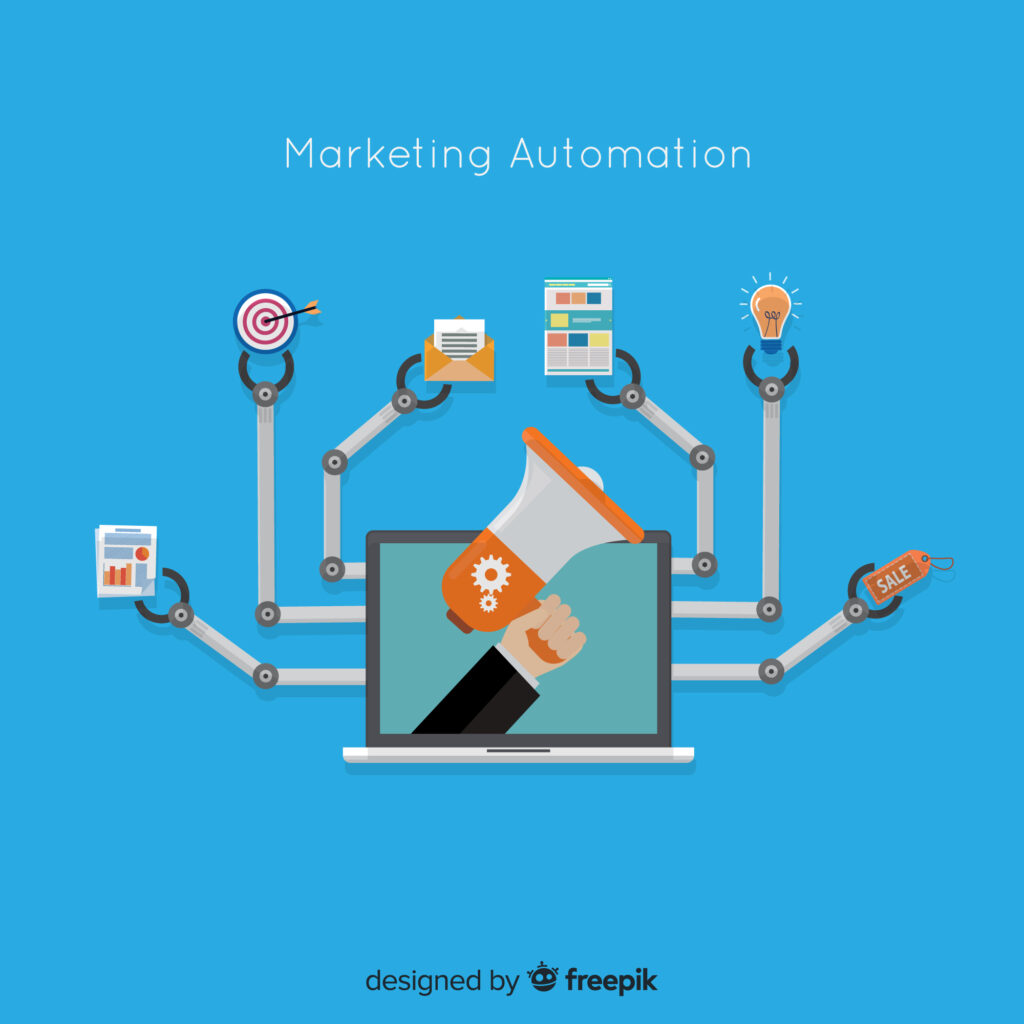
eCommerce marketing automation uses software to trigger timely messages and actions based on customer behavior, lifecycle stage, and product data.
It connects your storefront, CRM, inventory, and communication channels; making your marketing smarter and faster.
Core components include:
- Email/SMS automation (welcome, cart recovery, win-back)
- Customer segmentation & personalization
- CRM workflows
- Product catalog sync for targeted recommendations
- Automated ad audiences for retargeting
The goal is simple: send the right message to the right customer at the right time; automatically.
The Five Revenue-Driving Pillars of eCommerce Automation
To build a scalable automation system, focus on these five essential pillars.
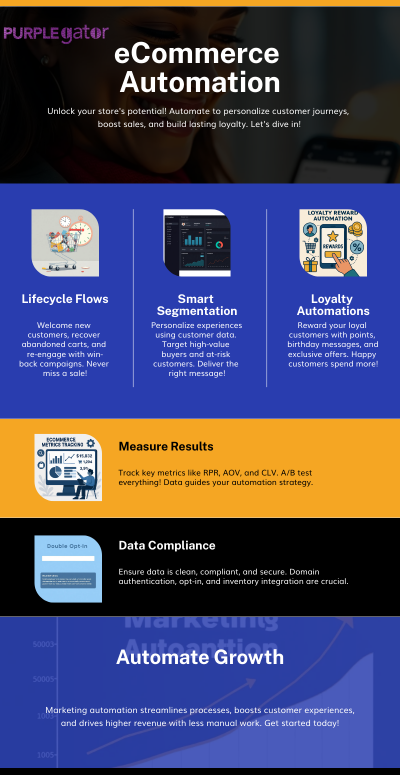
1. Essential Lifecycle Flows
These “always-on” automations generate a majority of automated revenue for eCommerce brands.
Abandoned Cart Flow
- 3 emails over 72 hours
- Send the first within 1 hour
- Include social proof and a clear CTA
Welcome Series
- Introduce your brand
- Offer first-purchase incentives
- Deliver product education
Post-Purchase & Replenishment
- How-to guides
- Personalized product recommendations
- Timed reminders for repurchase cycles
Win-Back/Re-Engagement
- Exclusive incentives
- “We miss you” messages
- Sunset policy for inactive customers
These flows reduce lost revenue, improve retention, and maintain engagement.
2. Personalization & Smart Segmentation
Segmentation moves you beyond generic messages to truly personalized experiences.
Use RFM segmentation (Recency, Frequency, Monetary) to identify:
- Loyal customers
- High-value buyers
- At-risk customers
- Discount-driven audiences
Pair this with dynamic recommendations like:
- “Frequently Bought Together”
- “Because You Viewed…”
- Top trending products
Sync these segments to Facebook and Instagram to create more effective retargeting ads.
3. Loyalty & Retention Automations
Retention is cheaper, and more predictable; than acquisition. Automation helps you nurture customers after their first purchase.
Key retention flows include:
- Points and tier rewards
- Birthday and anniversary messages
- Referral prompts
- Milestone achievements
- Product education sequences
When customers feel valued, they return more often and increase their average order value.
4. Measurement & Optimization
Tracking the right KPIs ensures your automation strategy delivers real results; not just activity.
Important metrics:
- Revenue per Recipient (RPR)
- Average Order Value (AOV)
- Customer Lifetime Value (CLV)
- Unsubscribe rate
- Opt-in rate
- Attribution by channel
Run A/B tests on:
- Subject lines
- Offers
- Send time
- Product blocks
- Content personalization
Shift budget and focus toward top-performing automations weekly.
5. Data Infrastructure & Compliance
Your automation can only be as effective as the quality of your data.
Ensure:
- A single customer view across CRM and store
- Domain authentication (SPF, DKIM, DMARC)
- Double opt-in and preference centers
- Inventory and catalog integration
- Suppression of out-of-stock items
A clean, compliant system improves deliverability, personalization, and performance.
Top Tools for eCommerce Marketing Automation

Choose tools that integrate natively with your storefront and CRM.
Email/SMS Automation
- Klaviyo
- Drip
CRM & Lifecycle Tools
- HubSpot
- Salesforce
Retargeting & Social Management
- Meta retargeting audiences
- Hootsuite
Conversational Automation
- ManyChat
- Customers.ai
Operational Automation
- Ordoro
- Brightpearl
Pick a stack that fits your workflow; not the other way around.
Implementation Checklist
Here’s a streamlined plan to launch your automation system effectively:
- Map your customer lifecycle
- Identify essential flows (welcome, cart, post-purchase, win-back)
- Choose your automation tools
- Build visual workflows with QA testing
- Train your marketing team
- Launch gradually and monitor weekly
- Expand automations based on results
Following a structured approach prevents overwhelm and ensures your flows work flawlessly.
High-Impact Playbooks That Drive Revenue
These proven strategies consistently boost conversions:
- Abandoned cart optimization. Use urgency, social proof, and free shipping thresholds.
- Product recommendation blocks. Add to emails, PDPs, and category pages.
- Upsell and cross-sell flows. Triggered immediately after purchase.
- Browse abandonment. Target users who viewed products but didn’t add to cart.
These automations increase average order value and capture missed revenue effortlessly.
Looking Ahead: The Future of eCommerce Automation
Automation is evolving rapidly. Here’s what’s next:
- AI-driven predictive personalization
- Real-time onsite behavior triggers
- AR/VR try-on experiences
- Automated content generation and dynamic ads
Start with small pilots before rolling out advanced automation across your entire catalog.
The Bottom Line
Marketing automation transforms eCommerce businesses by streamlining processes, improving customer experiences, and driving higher revenue with less manual effort. By implementing lifecycle flows, personalizing campaigns, and analyzing key metrics, you can build a sustainable system that grows with your business.
Ready to scale your eCommerce revenue with smarter automation?
Contact us today, and let our team help you build high-impact automated flows that increase CLV, boost conversions, and improve ROAS.
Related Reading
Marketing Automation for eCommerce: Complete Marketers’ Guide
The AI Paradox: Balancing Automation with Authenticity in Email Marketing
Transform Your Marketing with Automated Real Estate Newsletters