Blog /
How Small Businesses Can Use Promotional Products for Growth
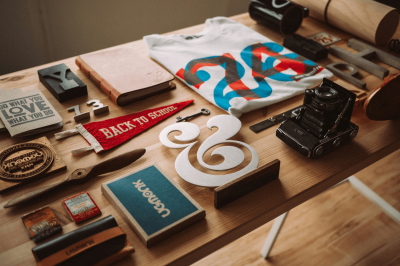
Digital advertising gets most of the attention in marketing budgets, but promotional products have quietly held one of the best cost-per-impression ratios in the business for decades. A well-chosen branded item that costs a few dollars to produce can generate thousands of impressions over months or years of daily use. For small businesses working with tight budgets, that kind of efficiency is hard to ignore.
At Purplegator, promotional products are one part of a broader marketing strategy, and when they’re treated that way, the results are measurably better than when they’re used as a one-off tactic. This guide covers how to choose the right items, use them at the right moments, and track whether they’re actually working.
Why Promotional Products Still Deliver
The core appeal hasn’t changed: people keep useful things. Unlike a digital ad that disappears the moment someone scrolls past it, a well-chosen branded item sticks around. It sits on a desk, gets carried in a bag, or gets used every morning in the kitchen, creating repeated impressions without any additional spend.
The data consistently backs this up. Studies from the Promotional Products Association International show that branded merchandise generates stronger recall than digital or print advertising, with a significant percentage of recipients able to name the advertiser months after receiving an item. For small businesses trying to build name recognition in a local market, and in the Philadelphia region, that competition is real, and staying power matters.
What makes promotional products particularly effective for small businesses is the combination of low cost per impression and the physical nature of the interaction. Handing someone something genuinely useful creates a moment of positive association that a banner ad cannot replicate.
Choosing Products Your Customers Will Actually Use
The most common mistake small businesses make is choosing items based on price rather than relevance. A cheap item that ends up in a drawer after a week generates zero impressions. A slightly more expensive item that gets used daily for a year delivers far more value per dollar spent.
Before choosing any promotional product, ask one question: will my specific customers actually use this? The answer depends entirely on who those customers are and what their daily life looks like.
A coffee shop distributing branded reusable cups makes sense because the item ties directly to what the customer does there. A home services company giving out branded measuring tapes or utility knives makes sense because it fits the context of home ownership. A fitness studio offering branded water bottles or resistance bands makes sense because it matches what their members care about.
Items that tend to perform well across most audiences include drinkware, tote bags, notebooks, phone accessories, and apparel, but only when the quality is good enough that people actually want to use them. A flimsy pen or a poorly printed shirt reflects poorly on the brand. A quality item does the opposite.
When in doubt, practical beats clever. An item people reach for every day generates more impressions than a novelty item that gets looked at once and forgotten.
Events and Trade Shows: Your Highest-Leverage Distribution Moment
Events give you direct access to a concentrated audience, which makes them one of the best opportunities to put branded products in the right hands. Whether it’s a local community event, a trade show, or a networking conference, the goal is to give people something they will actually keep, not just something to fill a conference bag on the way out.
A few things make event distribution work. First, tie the item to a conversation rather than just handing it out passively. When a staff member explains the item and makes a brief connection to the business, the product becomes associated with that interaction rather than becoming anonymous swag. Second, choose items that travel well. Something useful enough to take home rather than leave at the venue extends your brand exposure well beyond the event itself. A quality branded tote bag is a classic example, it solves an immediate problem at the event while continuing to deliver impressions afterward.
Third, consider the event context when choosing items. An outdoor community festival calls for something different than a professional industry trade show. Matching the product to the setting makes the choice feel intentional rather than generic.
For businesses that exhibit regularly, pairing promo product distribution with a social media management strategy that encourages tagged photos can significantly extend the reach of each event at almost no additional cost.
Seasonal Campaigns Create Natural Urgency
Seasonal promotions give small businesses a clear reason to engage customers and create some urgency around branded merchandise. Holiday gift campaigns, summer giveaway bundles, and back-to-school promotions all provide context that makes a branded item feel timely rather than random.
Limited-edition items work particularly well because scarcity increases perceived value. A branded item available only for a specific window tends to be kept and used more than a widely distributed standard item, worth considering when budget allows for something higher-quality.
Seasonal campaigns also work well as customer appreciation tools. A small gift sent to existing customers during the holidays reinforces the relationship and keeps your brand visible without requiring a direct sales pitch. Combining that physical touchpoint with a targeted email marketing campaign around the same time creates a consistent presence across both channels.
Connecting Promotional Products to Your Digital Marketing
Promotional products work harder when they connect to a broader digital strategy rather than operating in isolation. A few straightforward integrations can significantly extend the reach and measurability of any campaign.
Adding a QR code to a branded item that links to a specific landing page, promotion, or social profile turns a physical item into a trackable digital touchpoint. When someone scans that code, you know the item is in active use, and you can measure the downstream activity it generates. Encouraging customers to share photos of branded items with a specific hashtag extends the campaign to their networks at no additional cost. A well-designed item that people are genuinely proud to own is more likely to generate that kind of organic sharing.
Promotional giveaways also work well as a hook for growing email or SMS subscriber lists. Offering a branded item in exchange for an opt-in gives customers a tangible reason to engage and gives the business a direct line of communication going forward. Text messaging in particular works well here—the opt-in rate for SMS is high when there’s a clear, immediate incentive attached.
Measuring Whether It’s Actually Working
Measuring the return on small business promotional products is more involved than measuring a digital campaign, but it’s not impossible. The key is connecting the distribution of products to specific business outcomes rather than treating them as a general awareness expense.
Approaches that work well: tracking website or landing page traffic tied to a QR code on a distributed item, monitoring referral activity or new customer acquisition during and after a campaign, and comparing repeat purchase rates among customers who received promotional items versus those who didn’t. For event-based distribution, tracking new contacts generated and following their conversion rate over the following weeks gives a much clearer picture of what the investment actually delivered.
Pairing promotional campaigns with analytics tracking from the start makes it significantly easier to evaluate performance and make the case for future investment. The broader point is that small business promotional products should be planned with measurement in mind from day one, not evaluated after the fact.
Quality and Design Communicate Your Brand
The quality of a promotional item tells people something about the quality of the business behind it. Customers make those associations quickly and often unconsciously. A well-made, thoughtfully designed item signals a business that pays attention to detail. A cheap, poorly printed item signals the opposite.
This doesn’t mean spending the most money possible on every item. It means being selective: fewer items of better quality rather than large quantities of low-quality merchandise. The creative assets behind the product matter just as much as the product itself. A clean logo, readable text, and a restrained color palette on a well-made item will consistently outperform a cluttered design on a flimsy one.
When in doubt, simplicity wins. Your logo and one clear message are usually enough. Resist the temptation to pack every piece of contact information, every tagline, and every URL onto every available surface.
Making It Part of a Strategy, Not a One-Off Spend
Small business promotional products are not a magic solution, but chosen thoughtfully and integrated into a broader marketing strategy, they deliver a kind of visibility and brand association that digital advertising alone struggles to match. For small businesses building relationships in a local market, that physical, lasting presence is genuinely hard to replicate through other means.
Purplegator works with businesses across the Philadelphia region and beyond to build marketing strategies that make every dollar work harder—including how and when promotional products fit into the mix. If you’re ready to build a campaign that connects with your audience and drives measurable results, let’s talk.
Ready to browse? Explore our full promotional products catalog at Purplegator Promotional Products.